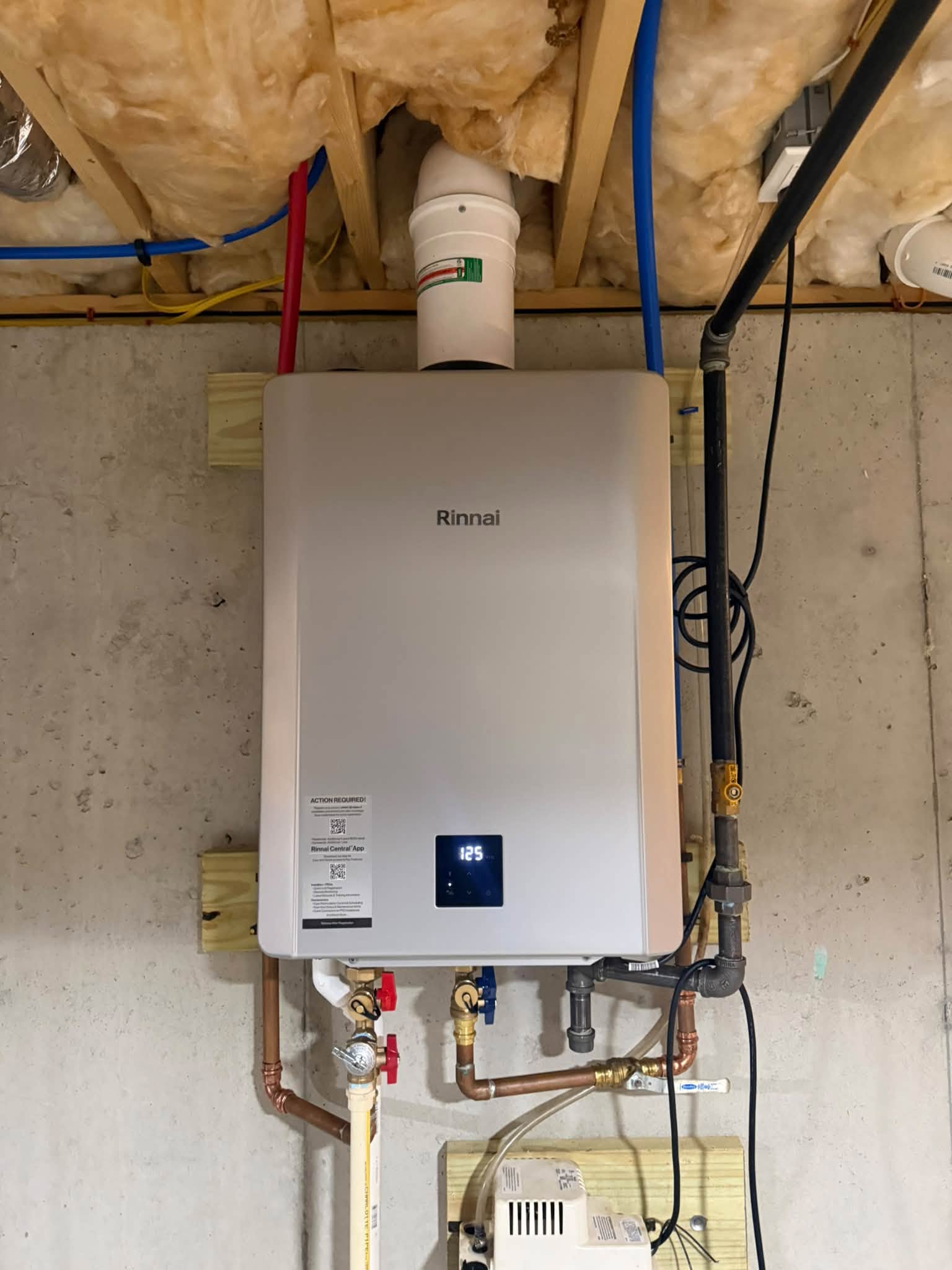
Plumbing Services in Winchester, MA
PE Mechanical does the plumbing that sits next to heating work: water heaters, tankless conversions, the piping around a boiler or a heater swap, shutoffs and valves, and the connections a heating job needs.
Serving Winchester, Boston, Cambridge, Lowell and Quincy.
What plumbing does PE Mechanical do in Winchester?
PE Mechanical does the plumbing that goes with heating work in Winchester and the towns around it. That means replacing water heaters, converting a storage tank to a tankless unit, and piping around a boiler or a heater swap. It means the shutoffs and valves that let a unit be isolated and serviced, and the connections a heating job needs when old equipment comes out and new equipment goes in.
A water heater swap shows why it is planned as one job. The unit, the water piping, the vent and the gas or electric supply all have to agree with each other, and they agree more easily when the crew that sets the equipment also plans the plumbing around it.
That is the scope: the water side of the mechanical room, next to the boiler, the furnace or the air handler. If your job sits outside it, say so when you request a quote and we will tell you plainly.
Water side schedule
Water heaters
Replacing a storage water heater, with the shutoffs and connections it needs.
Tankless conversions
Taking a tank out and hanging a tankless unit on the wall, with the piping, venting and fuel or power work that goes with it.
Piping around a boiler or heater
The water feed and shutoffs around a boiler, and the piping that moves when a heater is swapped. The boiler itself is on the boiler installs page.
Shutoffs and valves
Isolation valves so a unit can be serviced without shutting water off to the whole house, and new ones where the old ones no longer close.
Heating connections
The connections a heating job needs when equipment is replaced. The equipment side is on the residential HVAC installation page.
A storage tank out, a tankless unit in
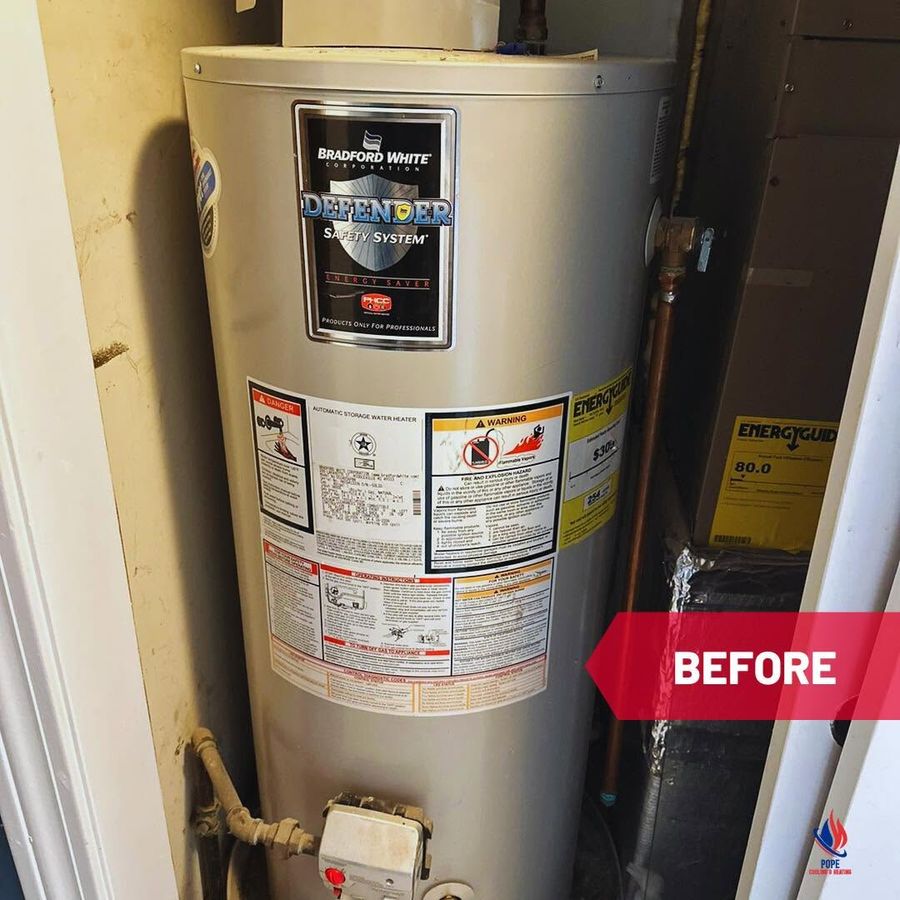
The pair below is a water heater swap: the storage tank that was in service, and the wall-hung tankless unit that took its place. The unit changed, and so did where the pipes run.
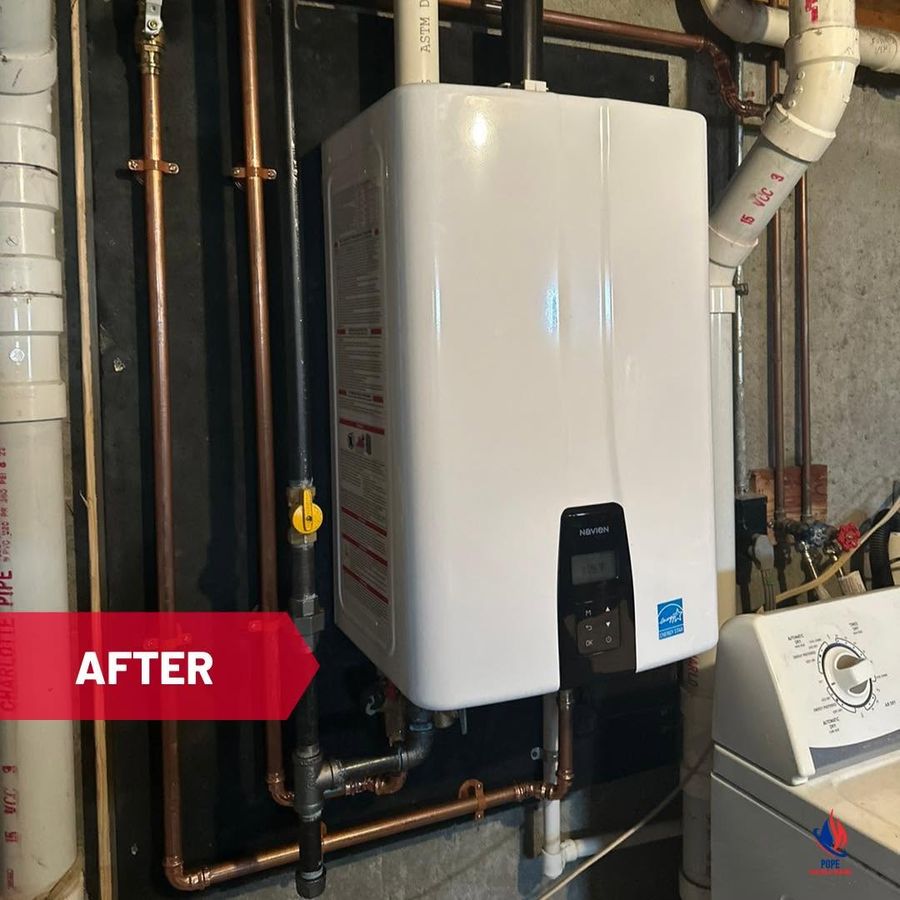
- Gas shutoffA yellow-handled valve on the black iron line beside the unit.
- Copper water linesClamped to the wall and run to the connections at the bottom of the unit.
- Vent pipeWhite plastic pipe running up from the top of the unit.
Look at what moved. The tank stood on the floor and took its water on top. The tankless unit hangs on the wall and takes its water low. That one difference sets up most of what follows.
Tank or tankless: what actually changes
Five things decide it. Here is what each one means for a storage tank and for a tankless unit.
Footprint
A floor-standing cylinder. It needs floor space, head height and a clear path to its controls, and whatever stands beside it has to leave it room.
Hangs on the wall, so the floor underneath stays clear. It needs open wall that can carry it, and room around it to be serviced.
Two taps at once
The tank holds a reserve. Two fixtures draw from it together until the reserve runs down, then the water turns cooler while the tank reheats. A busy morning can empty one.
No reserve to run down, so a long shower does not run out. The limit is flow: ask for more hot water at once than the unit can heat and it thins out. In January the incoming water is colder, so the same unit heats less flow.
Venting
A standard gas tank vents up a flue or a chimney, so it has to sit near one and the flue has to pitch upward. An electric tank has no vent at all.
A gas tankless unit needs its own vent pipe run to an outside wall or the roof, and often a second pipe to bring air in. A condensing unit also needs somewhere for its condensate to go. If the old tank shared a chimney with a boiler or furnace, that chimney is worth a second look once the tank is gone.
Gas or electric
A gas tank runs on a small gas line with a shutoff. An electric tank needs its own circuit. A like-for-like swap often reuses both.
A gas tankless unit burns far more gas at once than a tank does, so the gas line is sized to it and is often larger than the one it replaces. It also needs power for its controls and fan. An electric tankless unit draws a lot of current, so the panel and the wire run decide whether it is practical.
What it needs from the piping
Cold water in and hot water out, both on top. The lines are usually already where the new tank lands, so the existing piping is often reused, with a fresh shutoff on the cold side.
Water connects low on the unit, not on top, so the lines get re-run. Service valves go on so it can be flushed. Old, narrow or corroded lines can hold back the flow it needs, and may have to be replaced.
A tank usually fits when
- The new heater has to go where the old one stands.
- The flue and the gas line or circuit are fine as they are.
- Hot water use is steady and modest, not several fixtures at once.
- You want the smallest change to the room.
Tankless usually fits when
- You want the floor space back.
- There is open wall and a route for the vent.
- The gas line or the electrical panel can carry it, or can be upgraded.
- Hot water is used in long stretches, such as long showers or a deep tub.
The room decides more often than preference does. Tell us what you have now when you request a quote.
Request a quoteWhat happens on a water heater swap
Look at what is there
The existing heater, the flue or vent, the gas or electric supply, the shutoffs and the way the piping runs.
Match the unit to the room
Tank or tankless, and what size, comes from how the house uses hot water and what the room will take.
Swap and pipe
The old unit comes out. The new one is set, piped, vented and connected, with shutoffs on the lines.
Test and walk through
The unit is started and checked for leaks and for hot water at the taps, and you are shown where the shutoffs are.
What decides the quote
- Tank or tankless.
- How far the new unit sits from the old unit's piping, vent and fuel line.
- The condition of the existing piping and shutoffs.
- Whether the vent or the gas line has to be re-run or made larger.
- Access to the room.
Describe your setup when you request a quote and we will work from that.
Plumbing questions, answered
Straight answers on water heaters, tankless units and the plumbing around heating work in Winchester and nearby towns.
Is PE Mechanical a full plumbing shop?
No. Plumbing at PE Mechanical is the water side of heating and hot water work: water heaters, tankless conversions, piping around a boiler or a heater swap, shutoffs and valves. If a job in Winchester or the towns around it sits outside that, tell us when you request a quote and we will say so plainly.
Should I replace my water heater with a tank or a tankless unit?
It depends on three things: the floor space you want back, how your household uses hot water, and what the room can carry. A tank swaps in where the old one stands. A tankless unit gives the floor back but needs a vent route and a gas line or electrical supply that can feed it. The comparison above goes through each one.
Will a tankless water heater keep up when two showers run at once?
It can, if the unit is sized for it. A tankless unit has no reserve to run out, but it can only heat so much water at once, and that amount drops when the incoming water is cold in winter. Tell us how many fixtures run together in your house and we will size from that.
What decides the cost of a water heater swap?
The type of unit, how far it sits from the old one's piping, vent and fuel line, the condition of the existing piping and shutoffs, and whether the vent or gas line has to be re-run or made larger. A like-for-like tank swap changes less than a tankless conversion. Describe your setup when you request a quote and we will quote from that.
Do you do the piping around a boiler?
Yes. The water feed, shutoffs and supply piping around a boiler are part of this work, planned with the boiler itself so the pieces agree with each other. The boiler replacement is covered on the boiler installs page, so the two can be one job.
How long does a water heater swap take?
A like-for-like tank swap is the shorter job. A tankless conversion takes longer because the piping, the vent and the fuel or power connections all move. We do not give a time without seeing the room, so describe what you have when you request a quote and we will tell you what to expect.
Which towns do you cover for plumbing work?
PE Mechanical works in Winchester, Boston, South Boston, Dorchester, Cambridge, Newton, Lowell, Lynn, Brockton and Quincy. Tell us your town when you request a quote and we will confirm we can get to you. If you are just outside that list, ask anyway and we will give you a straight answer.
Tell us what is in your mechanical room.
Describe the water heater or boiler you have now, where it sits, and whether you are weighing a tank against a tankless unit. We will take it from there.
Request a quoteRelated work
Rated 5.0 across 3 Facebook reviews.Read the reviews
Plumbing Services in Winchester, MA